



Guest expectations have shifted significantly over the past five years.
What has followed isn't one dramatic change, but a steady rise in what guests expect before they arrive, during their stay and after they leave. Convenience, personalization and frictionless service are no longer differentiators. They're the baseline.
For hotel operators thinking through strategy and investment over the next two to three years, the question is not whether to invest in the future of hotel guest experience. It is which trends will matter most across technology, operations, and guest expectations, and how to build for them without overcomplicating the business.
We've looked into the crystal ball, drawing on industry research, emerging technology, and what the most forward-thinking operators are already doing to map out what matters most. From digital guest experience and personalization at scale, to AI, operational technology, and sustainability: here is what is shaping the future hospitality technology and hotel guest experience trends that will define the industry over the next few years.
The guest journey is now digital end to end
The hotel experience used to begin at the front desk. It now begins weeks earlier, at the point of booking, and continues through pre-arrival messages, digital check-in, in-stay communications, and post-stay follow-up.
Each of those touchpoints is an opportunity to build trust or lose it. Guests who receive timely, relevant communication before they arrive feel taken care of before they have walked through the door. Guests who are left to wonder whether their room is ready, or who must wait in a lobby queue after a long flight, form a different impression entirely.
Pre-arrival communication sets the tone
Automated pre-arrival messaging—confirmation emails, digital welcome notes, arrival instructions—has become standard practice. The quality of those messages is what separates properties. A message that confirms check-in time, explains parking, and offers a tailored upgrade communicates attentiveness. A generic confirmation does not.
RMS guest experience software enables operators to automate personalized communication throughout the guest's stay, including pre-arrival, in-stay, and post-stay messages tied to booking data and guest preferences.
Contactless check-in is expected, not exceptional
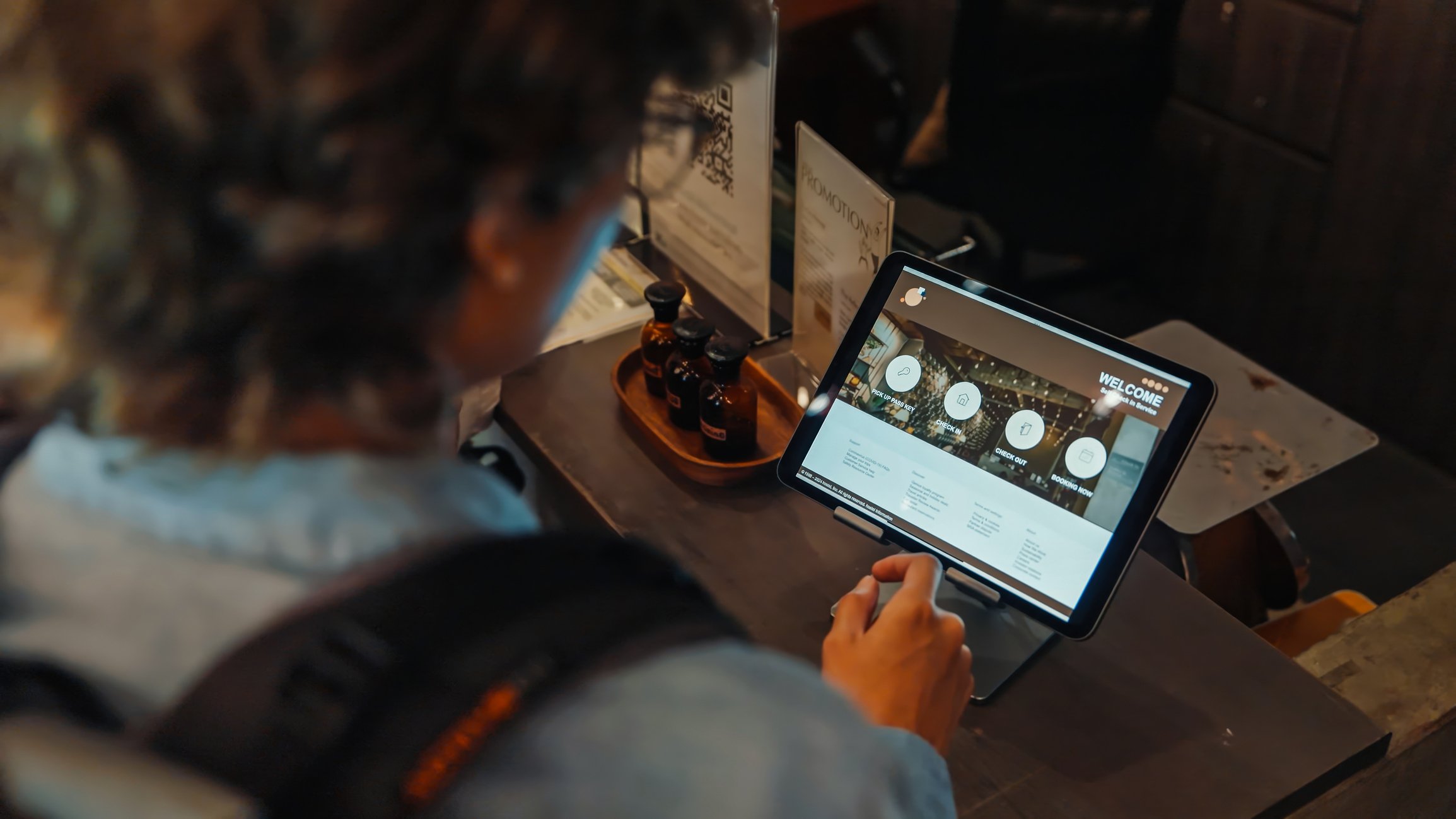
Mobile and contactless check-in has moved from a premium feature to a guest expectation, particularly among travelers under 45. The ability to bypass the front desk, access room details digitally, and complete arrival formalities from a phone is now standard in most mid-to-upper segments.
Properties that have not yet implemented a digital check-in option are at a growing disadvantage, particularly as online travel agency (OTA) review scores increasingly reflect the arrival experience. RMS guest portal software gives guests a self-service channel for check-in, preferences, and requests, reducing pressure on front desk teams during peak arrivals.
A digital guest journey works best when the messages and touchpoints within it feel personal. Generic communication through a slick channel is still generic. That is what makes personalization the next piece to get right.
Personalization at scale
Personalization is one of the most cited priorities in hospitality—and one of the hardest to execute consistently. It is easy to personalize for guests you recognize. It is harder to do it at scale without robust data.
The properties getting this right are not relying on staff memory. They are using their property management system (PMS) to bring guest preferences, booking history, and stay patterns to the point of service. That data informs everything from room assignment to upsell timing.
Data-driven upselling
Upselling has traditionally been a front desk conversation. Increasingly, it happens before guests arrive. A guest who booked a standard room two weeks out is a strong candidate for an upgrade offer sent four days before arrival. This works better than a pop-up at check-in when they are tired and focused on getting to their room.
Automated upsell workflows, triggered by booking data and stay proximity, consistently outperform manual efforts. The key is relevance: a family suite offer is not useful to a solo business traveler. A PMS that surfaces the right offer at the right time, based on actual guest data, drives incremental revenue without creating friction.
Preferences that carry across stays
Repeat guests who have to restate their preferences every visit feel overlooked, which is a small frustration that quietly erodes loyalty and makes return visits less likely. A guest who once requested a high floor, a late checkout, and extra pillows will expect those preferences to be remembered on return. Systems that capture and apply that data create a genuine sense of welcome without requiring staff to do anything extraordinary.
Where personalization is heading
That is where the industry is today. Where it is heading is further still. AI is beginning to shift personalization from reactive—remembering what a guest asked for last time—to predictive: anticipating what they are likely to want before they ask. Personalization is likely to become smarter and more proactive as the technology develops. Rather than simply remembering what a guest requested last time, hotels will increasingly be able to use booking history, preferences and behavior to make communications and offers more relevant throughout the guest journey. The opportunity isn't to personalize everything, but to use the data you already have to make each interaction feel a little more considered.
Getting personalization right depends on clean, connected data, and that is increasingly a back-of-house story as much as a front-of-house one. The operational technology guests never see is what makes the experience they do see possible.
Operational technology that guests never see
Not every hospitality innovation is guest-facing. Some of the most important changes in hospitality are happening behind the scenes: leaner operations, better maintenance management, and smarter distribution.
Guests quietly appreciate smooth operations but they are far more likely to remember things that go wrong. A room that is not ready, a maintenance issue that was not resolved, a double booking—these are the failures that end up in reviews. The hospitality operations software that prevents those failures is invisible when it works.
Maintenance management before problems arise
Reactive maintenance is expensive. A blocked drain that becomes a burst pipe, or an HVAC issue that generates complaints through a weekend, disrupts guests and drives up repair costs. The answer is not faster reaction. It is prevention.
Modern PMS platforms support that approach by allowing properties to log, assign, and track maintenance tasks by unit, with recurring schedules and escalation triggers. This is where operational discipline pays dividends for properties of any size. Preventive schedules protect asset value. They also protect review scores.
Distribution strategy and direct booking growth
The channels a hotel uses to take bookings directly affect profitability. OTA bookings bring volume; they also carry commission costs that can reach 15% to 20% of the room rate. Direct bookings through a property's own booking engine carry higher margins.
The most effective operators use OTAs strategically to fill inventory and capture new guests, while investing in direct booking conversion for repeat and high-value travelers. Channel management tools that synchronize availability and rate across platforms reduce administrative time and prevent the overselling that damages guest trust.
Strong operations create the foundation. The question now is how emerging technology, particularly AI, can extend what well-run properties are already doing, without adding complexity.
The AI question: Useful now, essential soon
AI is finding its way into more areas of hospitality, but that doesn't mean every process needs it. The more useful question for hotels is: where can it genuinely make things easier for guests or give teams time back?
Revenue management is one example. Demand, booking pace and market conditions are constantly changing, making it difficult to keep up through manual processes alone. Through our partnership with RoomPriceGenie, Revenue Intelligence brings relevant pricing and demand signals directly into RMS, so teams can see what's changing and act on it without constantly switching between systems.
AI-powered phone systems are another area where AI can take on some of the repetitive work. Hotels deal with many of the same questions every day, from confirming reservations and check-in times to answering questions about amenities or late checkout. AI can help handle straightforward enquiries, giving staff more time for the conversations and moments that genuinely need a person.
And that's perhaps where AI has the most potential in hospitality. Not in replacing the human side of the guest experience, but in taking some of the repetitive work away from the people delivering it.
Over the next few years, the hotels that get the most from AI won't necessarily be the ones using it everywhere. They'll be the ones that are clear about where it adds value — and where a human still does the job better.
Sustainability as a guest experience factor
Sustainability is becoming a more visible part of the guest experience. For some travelers, how a hotel approaches its environmental impact can play a role in where they choose to stay. But increasingly, it's not enough to simply say you're sustainable. Guests want to understand what that looks like in practice.
And it doesn't have to mean major infrastructure changes. Reducing food waste, managing energy use more efficiently, sourcing locally and cutting unnecessary consumption can all form part of a more sustainable operation.
Technology has a role to play here too. Better visibility into occupancy and operations can help hotels make more informed decisions about where resources are being used, while giving them clearer information to communicate the steps they're taking.
The opportunity is to make sustainability part of how the hotel operates every day, rather than something that sits separately as a marketing message.
Where RMS fits in
The technology behind a great guest experience should make things simpler, not add more work.
RMS brings the different parts of the guest journey together, from booking and pre-arrival communication to check-in, payments, maintenance, revenue management and post-stay follow-up. With guest and booking data connected in one place, teams have the information they need to make better decisions and deliver a more consistent experience throughout the stay.
For multi-property operators, that also means greater visibility across the business, without teams having to jump between disconnected systems.
Because ultimately, technology does not replace hospitality. It protects the space for it.

What to focus on now
Guest expectations will continue to change, and new technology will keep giving hotels more ways to respond. But staying ahead doesn't mean adopting every new tool or adding more complexity.
The hotels that are best prepared for what's next will be the ones that get the foundations right: connected data, simpler processes and technology that gives their teams more time to focus on their guests.
So, where should you focus?
- Make the journey easier before guests arrive with clear, timely communication.
- Make it simple for guests to book direct.
- Use the guest data you already have to make their experience more relevant.
- Stay ahead of operational issues before they become guest problems.
- Make sustainability part of how you operate, not just how you market.
The future of guest experience isn't about replacing the human side of hospitality with technology. It's about using technology to remove the friction around it.
Get that balance right, and you're not just preparing for what guests might expect in 2028. You're creating a better experience for the guests staying with you today.
Want to see how RMS can help you create a simpler, more connected guest experience? Book a demo and see it in action.