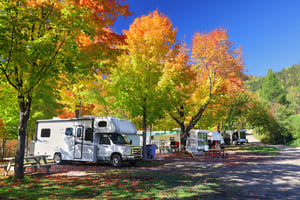



Glamping vs camping: what’s the difference and why does it matter?
Are your guests campers or glampers? The answer depends on whether they want to bring their own gear and handle their own setup or prefer to arrive to find hotel-like amenities waiting for them.
Glamping (glamorous camping) provides swoon-worthy accommodation like architect designed cabins, eco-friendly yurts, or deluxe safari tents with hotel amenities—real beds, private bathrooms, climate control, and Wi-Fi—at premium prices. Traditional camping typically sees guests bringing their gear to sleep outdoors with minimal amenities at budget prices. The key difference: camping requires self-sufficiency and setup; glamping delivers unique outdoor experiences in comfort.
Understanding the difference between camping and glamping matters because the outdoor hospitality market is evolving fast.
Shifts are reshaping the industry in ways many operators haven’t yet considered. The US glamping market is projected to grow from $4.2 billion in 2025 to $8.2 billion by 2032*, almost doubling in seven years. Traditional camping continues its steady growth, serving different but equally valuable guest segments.
Which model fits your property depends on your location, guest base, and business goals. Let’s break down what separates these experiences, then explore five trends reshaping how operators approach outdoor hospitality.
Quick answer: camping vs glamping
Here’s how camping and glamping differ across six key factors:
|
Traditional camping |
Glamping |
|
Tent or basic shelter that guests bring and set up themselves. |
Pre-setup accommodation like cabins, yurts, safari tents, or pods. |
|
Sleeping bags on the ground or air mattresses. |
Real beds with quality linens. |
|
Minimal amenities (campfire cooking, shared bathrooms, no electricity). |
Full amenities (kitchens or on-site dining, private bathrooms, climate control, Wi-Fi). |
|
DIY experience requiring gear, setup, and self-sufficiency. |
Turnkey experience with hospitality services. |
|
Budget pricing. |
Premium to luxury pricing. |
|
Appeals to adventurers seeking challenge and simplicity. |
Appeals to travelers wanting nature without sacrificing comfort. |
Both experiences connect guests with nature. The difference lies in comfort level, price point, and target audience. Traditional camping attracts adventurers and budget-conscious families. Glamping draws travelers who want the outdoors without roughing it: couples seeking romance, families wanting comfortable holidays, wellness seekers, and first-time campers testing the waters.
A day camping vs a day glamping
The difference between camping and glamping essentially comes down to guest experience:
Morning: Camping means waking when the sun heats your tent, starting a campfire for coffee, and walking to shared bathhouses. Glamping means waking in a real bed, making coffee in your kitchenette, and showering in your private bathroom.
Midday: Campers hike and explore, then retreat to tents if the weather turns. Lunch comes from coolers requiring ice management or cooking on a portable camping stove. Glampers enjoy the same activities but return to climate-controlled comfort, where they can use Wi-Fi and access on-site amenities.
Evening: Camping involves gathering firewood, cooking over a fire, cleaning dishes in buckets, and retreating to tents as temperatures drop. Glamping means cooking on provided equipment, cleaning up in full kitchens, using heaters or coolers to control the temperature, and reading by electric light.
This day-to-day comparison shows why glamping appeals to those who love nature but not discomfort, and why traditional camping attracts people who value the challenge and simplicity.
.webp?width=1500&height=700&name=RMS_GlampingVCamping_Image1%20(1).webp)
Five trends transforming glamping
1. Year-round revenue replaces seasonal operations
Modern glamping structures (insulated cabins, climate-controlled pods, weather-resistant domes) can handle extreme temperatures and high winds. Winter is no longer downtime; it’s ski season, cozy retreat season, and holiday getaway season for families.
The revenue impact is clear: twelve months of bookings instead of six, no scrambling to cover costs during closed months, more predictable cash flow. Operators who’ve made the switch report stronger financials and the ability to hire full-time staff instead of seasonal workers.
2. Workations fill midweek vacancies
Remote work has changed travel patterns. Professionals no longer squeeze nature into a weekend; they work from glamping sites Monday through Friday, then explore on weekends.
Wi-Fi has shifted from nice-to-have to essential. Sites adding fast internet connectivity, dedicated workspace areas, and extended-stay pricing are capturing guests who book longer, spend more, and fill midweek vacancies.
Tuesday and Wednesday are no longer dead zones; they’re productive workdays for guests who join Zoom calls with scenic views in the background. Families are using this model too, with parents working remotely so kids can enjoy longer school holiday breaks in nature.
3. Wellness drives bookings and upsells
A demand for nature-based retreats that support mental well-being, stress reduction, and holistic health is contributing to the growing glamping market in the US.**
Operators are responding with wellness programs: on-site yoga sessions, guided meditation, spa treatments, farm-to-table dining emphasizing fresh and local ingredients. Some sites partner with wellness instructors for weekend retreats. Others keep it simple with hammocks, quiet zones, and intentional “digital detox” positioning.
The wellness trend creates upsell opportunities. Guests booking for relaxation often pay for massage add-ons, private yoga sessions, or upgraded meal experiences. Families appreciate wellness options too (kid-friendly yoga, nature walks, healthy meal programs).
.webp?width=1500&height=800&name=RMS_GlampingVCamping_Image2%20(1).webp)
4. Sustainability attracts mainstream travelers
Research by Booking.com shows that 84% of travelers prioritize sustainability# when choosing accommodation. That’s mainstream, not niche.
Guests want to know: Are you using renewable energy? Where does your water come from? What happens to waste? How do you minimize environmental impact?
It’s not necessary to rebuild your entire property to benefit. Start with visible changes: composting toilets, solar lighting, educational signage about local ecosystems, partnerships with conservation organizations.
Sustainability also reduces operating costs. Solar power cuts energy bills; water conservation lowers utility costs; durable, long-lasting structures mean fewer replacements.
5. Technology reduces costs and improves experience
Glamping sites pulling ahead use technology strategically. Contactless check-in eliminates front desk bottlenecks. App-controlled climate, lighting, and amenities let guests adjust from their phones. Solar-powered systems reduce energy costs. Automated booking and communication systems respond instantly to inquiries.
Technology solves two problems simultaneously: it reduces labor costs (fewer staff hours for check-in, guest communication, and property management) and improves guest experience (faster responses, more control, and modern conveniences).
Sites adopting these technologies report better reviews, higher occupancy rates, and lower operational overhead.
How property management systems support these trends
These trends create operational complexity. Year-round bookings, environment-friendly expectations, and extended workation stays all require different management approaches.
Integrated property management systems (PMS) like RMS become essential. The right PMS handles dynamic pricing, automated guest communication, channel management, multi-currency payment processing, custom booking rules by accommodation type, and real-time reporting on occupancy and revenue.
RMS is designed specifically for outdoor hospitality operations. The platform handles everything from simple tent site bookings to complex glamping reservations with multiple accommodation types and add-on services. You get a unified view of your entire operation on real-time dashboards.
The system integrates with major booking channels. Change availability once, and it updates everywhere. Accept a booking from any source, and the system blocks those dates across all channels automatically. This eliminates double-bookings and saves hours of administrative work every week.
What’s best for your property: camping, glamping, or both?
Here’s a framework that will help you decide.
Reasons to choose traditional camping
- Your guest base values authenticity and self-sufficiency over amenities
- You have limited capital for infrastructure investment
- Your location attracts adventurers, hikers, and budget-conscious families
- Seasonal operation matches your business model and lifestyle goals
- You want to offer budget pricing with higher volume
Justification for choosing glamping
- You can invest in durable structures with extended lifespans
- Your location supports premium pricing (near national parks, unique landscapes, or major cities)
- You want to attract travelers who don’t typically camp
- Year-round revenue is important for your financial goals
- You’re comfortable with hospitality service standards beyond basic campground management
Rationale for considering both
- Your property has space to segment different guest experiences
- You want to test glamping without fully committing
- You’re serving diverse guest segments (budget campers and luxury seekers)
- You want to maintain your existing guest base and expand upmarket
- You have the operational capacity to manage different accommodation types
.webp?width=1500&height=700&name=RMS_GlampingVCamping_Image3%20(1).webp)
Many successful operators start with traditional camping, then add a few glamping units to test demand. This minimizes risk and provides real data about what works at your specific property.
Consider starting small (2-4 glamping structures positioned in a quiet section of your existing campground). This lets you learn the operational differences (cleaning standards, guest expectations, pricing strategies) without overwhelming your team. You’ll quickly discover whether your market supports premium pricing, which accommodation types resonate with guests, and whether the additional revenue justifies the investment.
Some operators find that glamping units book at 90%+ occupancy with strong margins. Others discover their guests prefer the traditional experience and aren’t willing to pay glamping premiums. Both outcomes provide valuable information for future investments.
The key is making an intentional choice based on your property, your market, and your guests. Talk to your current guests. Survey them about interest in premium accommodation. Check what nearby properties offer and at what price points. Look at your booking data to identify gaps you could fill.
The bottom line
Glamping isn’t replacing camping; it’s creating a parallel market with different guests, different expectations, and different economics. The trends we’ve covered (year-round operations, workations, wellness focus, international guests, pet-friendliness, technology, and sustainability) are reshaping outdoor hospitality.
The opportunity lies in understanding these trends and deciding which ones align with your property and goals. You don’t need to chase every trend. You do need to know what your guests expect, what your competition offers, and where your property fits in the market.
The operators succeeding right now aren’t necessarily the ones with the fanciest properties or the biggest budgets. They’re the ones who’ve identified their niche (traditional camping done well, luxury glamping with full services, or a hybrid approach serving multiple segments). They’ve invested in the infrastructure and systems that support their chosen model. And they’ve committed to delivering consistent experiences that match what they promise.
The fundamentals remain the same whether you stick with traditional camping, go all-in on glamping, or run a hybrid model: understand your guests, deliver what you promise, and use technology to make operations efficient.
The outdoor hospitality industry is growing. Make sure you’re growing with it.
Frequently asked questions
What is the main difference between camping and glamping?
Camping requires self-sufficiency; glamping delivers comfort. Traditional camping requires guest to bring their own gear, set up their own shelter, and manage with minimal amenities as reflected in the budget prices. Glampers prefer to rely on others to provide the shelter and comfort.
Can a property offer both camping and glamping?
Yes. Many outdoor hospitality operators run hybrid models with traditional tent sites alongside glamping accommodation. This serves different guest segments and lets you test glamping demand without abandoning your existing business. The key is clear separation; glamping guests expect quiet and privacy, traditional campers often want community spaces.
How much does it cost to add glamping to an existing campground?
Investment varies widely. Basic glamping tents start at budget tier, premium cabins or pods reach resort to luxury tier. Durable structures often last 20+ years versus 3-5 years for entry-level options. Many operators start with 2-4 units to test market demand before scaling up.
What technology do I need to manage a glamping site?
At minimum, you need reliable property management software for bookings, payments, and guest communication. As you scale, consider contactless check-in systems, dynamic pricing tools, and channel management to synchronize availability across booking platforms. RMS offers integrated solutions designed specifically for outdoor hospitality operators.
What is glamorous camping?
Glamorous camping (or glamping) is exactly what it sounds like – camping that’s more glamorous than sleeping outdoors under a basic shelter. When you opt for glamorous camping, you get real beds, climate control, en-suite bathrooms, and reliable amenities. It costs more than camping but eliminates the need for camping gear, setup time, and physical discomfort. By removing the need to set up the camp site, glamping makes camping more accessible to people who are less able to manage the physical requirements.
What amenities do glamping sites typically include?
Most glamping properties include real beds with linens, private or shared bathrooms with hot showers, electricity, climate control (heating and cooling), and kitchenettes or access to on-site dining. Many add Wi-Fi, outdoor decks, fire pits, and premium touches like coffee makers, quality toiletries, and comfortable seating. Luxury glamping sites may include hot tubs, full kitchens, and spa services.
* Glamping Market Global Forecast 2026 - 2032, 360iResearch, 2026
** Global Glamping Market Size, Share, and Trends Analysis Report, Data Bridge, 2025
# Booking.com Sustainable Travel Report, Booking.com, 2025