



Social media for independent hotels: three ways to get noticed, build trust and drive bookings
Social media can be one of the most powerful tools an independent hotel has. But with so much content competing for attention, simply posting beautiful images of your rooms, restaurant or surroundings isn’t always enough to get noticed.
Your future guests are using platforms like Instagram and TikTok to discover places to stay, find inspiration and decide where to book. So how do you make sure your hotel is part of that conversation — without needing a huge marketing team or spending every spare hour creating content?
It comes down to being more intentional about what you share, who you work with and the stories you tell. From making your posts easier to find through social search to building genuine partnerships and showing the people behind your hotel, there are practical ways to make your social media work harder for your business.
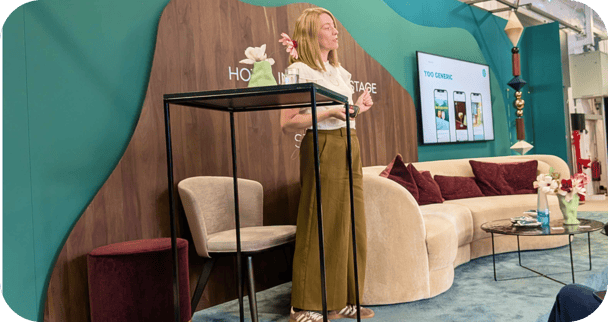
These were some of the key themes explored at the 2026 Independent Hotel Show in London, where social media expert Alison Battisby shared advice on how hotels can improve their visibility and connect with audiences in a more authentic way.
I think the biggest takeaway is that effective social media doesn’t have to mean chasing every trend or producing perfectly polished content. It’s about understanding what your guests are looking for, giving them a reason to engage, and showing them what makes your hotel worth choosing.
Here are three approaches worth building into your social media strategy — and how to put them into practice.
1. Make your hotel easier to find on social media
When was the last time you searched for a hotel on Instagram or TikTok? And, more importantly, does your own hotel appear when someone searches for the kind of stay you offer?
Social media is no longer just somewhere to share photos and keep your followers updated. People are increasingly using platforms like Instagram and TikTok as search engines in their own right, looking for everything from spa breaks and weekend escapes to recommendations for places to eat.
That creates an opportunity for independent hotels. But if you want potential guests to discover your content, you need to give the platforms enough information to understand what you're sharing.
Think about what your guests are searching for
Imagine a couple planning a long weekend in the Lake District. They might be searching for a romantic hotel in Windermere, a Lake District weekend break or somewhere with great walking routes and a cosy restaurant.
If your hotel offers exactly that, your social media content should make it clear. A beautiful video of your rooms or surroundings might catch someone's eye, but adding a descriptive caption, relevant on-screen text and a voiceover can help communicate what you're offering — and where guests can find you.
Think about three areas of your social media content:
- Captions: Include relevant details about your hotel, location, facilities and experiences. A beautiful photo is a great starting point, but a caption that simply says “The perfect escape” doesn't tell a potential guest very much.
- On-screen text: Add clear, relevant wording to your Reels and TikToks. For example, a video could open with “Your next Lake District escape” or “A cosy country hotel near Windermere”.
- Voiceovers: If you're talking over a video, naturally mention the experience or location you're showcasing. This gives viewers useful context and helps platforms interpret your content.
You don't need to cram every keyword into every post. The aim is to be specific and helpful, using the language your guests might use themselves.
Instead of relying on generic captions, highlight what makes your property worth visiting. That could be your location, a seasonal experience, your restaurant or the attractions guests can explore nearby.
The more clearly you communicate what your hotel offers, the easier it is for potential guests, and social platforms, to understand what makes it relevant.

Instagram inspiration: Showcasing the destination, not just the hotel
Here, I love how this seasonal Reel from Lafayette Hotel captures the beauty of autumn around the hotel, alongside local sights and activities. This kind of content helps potential guests discover what they can see and do during their stay, giving them more reasons to choose your location. Another great example here from Rudding Park.
Get into the habit of searching for yourself
Put yourself in your potential guests’ shoes. If someone were planning a stay at your hotel, what would they search for on Instagram or TikTok? Perhaps it’s a boutique hotel in the Scottish Highlands, a coastal break in Devon or a country hotel with a great restaurant.
Try searching for a few relevant phrases and see what comes up. Which hotels, local businesses and creators are getting noticed? You might find that your competition for visibility extends beyond other hotels to restaurants, attractions and local creators.
Use these insights to shape your own content, and consider using AI tools to brainstorm search phrases worth testing.
Remember, social media is just one part of the picture. Keep your website, Google Business Profile, review sites and other online listings up to date so potential guests can find out more about your property.
The takeaway: Start with a few searchable posts, see what resonates and use those insights to guide your next steps.
2. Build partnerships that introduce your hotel to new audiences
You don't have to grow your hotel's social media presence entirely on your own. In fact, some of the most interesting opportunities can come from working with other people.
Partnerships give you access to audiences who may not have discovered your hotel otherwise. They also give you a reason to create content that feels fresh, relevant and personal.
And partnerships don't have to mean working with a big-name influencer.
Look beyond follower counts
It's easy to assume that a creator with hundreds of thousands of followers will deliver better results than someone with a few thousand. But reach isn't the only thing that matters.
Micro-creators, often defined as those with fewer than 10,000 followers, can be particularly valuable for independent hotels. They may have generally a more engaged community, a clear niche or an audience that closely matches the guests you want to attract.
Before agreeing to a collaboration, ask yourself:
- Does this creator's audience match the guests we're trying to reach?
- Do their followers engage with their content through comments, likes and views?
- Does their content style fit our hotel and the experience we want to offer?
- Would this creator genuinely choose to stay at or visit our property?
- Could we use the resulting content again in our own marketing, with the appropriate permissions?
That last point is worth considering from the outset. A collaboration might give you much more than one social media post. With the right agreement, you could also gain authentic photography and video to use across your own channels or in advertising.
Find creators who fit your hotel, not just your sector
Here's where you can get creative with your approach.
If every hotel in your area is working with the same travel influencers, the content can quickly start to feel repetitive. Instead, think about what makes your property distinctive and who might naturally be interested in it.
For example, a hotel near popular cycling routes could partner with a cycling creator, while a historic property might appeal to someone who shares local history and heritage. If you're known for your afternoon tea, a local food blogger could be a great fit.
The key is to find creators whose interests align with the experience you offer. You're not just looking for exposure; you're giving someone a genuine reason to introduce your hotel to an audience that might love it.
Instagram inspiration: Reaching guests looking for a local staycation
Here, this collaborative Reel showcases the full stay, from the room and dining to the spa and sunset. The staycation angle suggests the hotel may be targeting guests looking for a getaway closer to home. It’s a good example of how understanding your target audience can help you choose creators and shape content around the experiences most likely to appeal to them.
Make collaboration work harder
When you find the right partner, consider using Instagram’s collaborative post feature. This allows content to appear on both profiles, helping you reach audiences from each account.
You could also team up with a local business to create something worth sharing. A hotel might partner with an outdoor activity provider to promote a weekend package, or work with a local artist to showcase a unique piece of the property. These collaborations give both businesses fresh content and introduce them to new audiences.
If you consider offering a stay or experience in exchange for agreed content, just be clear about what each side will provide, how the content can be reused and any disclosure requirements before committing.
Not every collaboration will lead directly to a booking, so look beyond likes alone. Consider engagement, referral traffic and enquiries, as well as whether you're reaching the right audience.
Instagram inspiration: Finding a brand that complements your hotel
Here, Sunnymead Hotel’s collaboration with homeware brand Mosey Me is a great example of two brands with a shared colourful aesthetic working together. The hotel provides a natural setting to showcase the collection, while Mosey Me introduces its audience to a hotel that could appeal to them for a future stay.
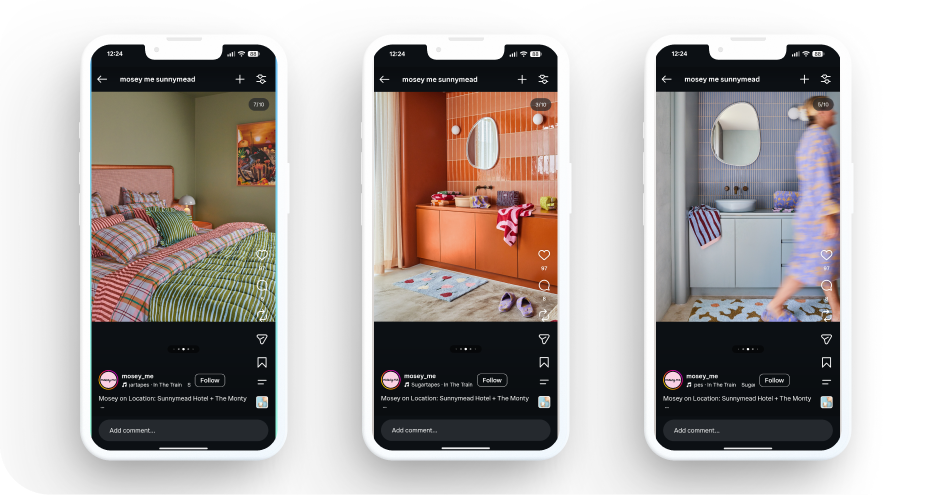
The takeaway: Choose partners for their relevance and credibility, not simply their follower numbers. The best collaborations feel natural, benefit both sides and give potential guests a genuine reason to consider your hotel.
3. Put people at the heart of your content
In a world where it's increasingly easy to generate polished marketing copy and images with AI, there's a real opportunity for independent hotels to stand out by showing what makes them human.
Think about what makes your hotel special. It could be your bartender sharing how to make the perfect signature cocktail, your team preparing the terrace for the first sunny day of spring, or a behind-the-scenes look at getting ready for a seasonal event. These moments give people a glimpse of the care and personality behind your guest experience, helping bring your hotel to life.
These are the stories that help people understand what staying with you might actually feel like.
Show the people behind the experience
Rather than relying entirely on room shots, food photography and promotional graphics, give your audience a glimpse behind the scenes.
You could film your gardener giving a tour of the vegetable patch, introduce a member of the housekeeping team, show how the views around your hotel change throughout the year or ask your general manager what makes your property different.
You don't need a complicated production setup. A smartphone, a clear idea and a little planning can be enough to create something engaging.
The important thing is to share something that feels specific to your hotel. A generic post about the importance of relaxation could belong to almost any property. A short video showing how your team prepares a particular room, sources local produce or creates a memorable guest experience is much harder to replicate.
Instagram inspiration: Sharing the little things that make your hotel unique
Here, I love how the owner of Fritton Lake shares the news that guests can now see the Highland cows in a nearby field. It’s a simple, personal video that puts a face to the hotel while highlighting a distinctive detail of the guest experience.
Let your team's personality come through
Of course, not everyone will be comfortable speaking directly to a camera. And that's absolutely fine.
Alison shared a few tips that I found really useful for helping your team feel more comfortable on camera, especially those who are a little camera-shy:
- Start small: Film hands preparing a dish or carrying out a task, without showing anyone's face.
- Film from behind: Capture team members going about their day without putting them directly in front of the camera.
- Try a voiceover: Let team members narrate behind-the-scenes footage rather than speaking on camera.
- Keep it short: Start with quick clips of staff at work and build confidence over time.
Even these small steps can help bring your hotel's personality to life.
If someone is happy to take a small step towards being on camera, ask them one simple question, such as:
- What's your favourite thing about working here?
- What's one thing guests might not know about our hotel?
- What's your favourite dish on the menu?
- What would you recommend guests do while they're here?
Short answers can become a series of videos that introduce your team and share their knowledge without requiring anyone to deliver a lengthy speech.
As people grow more comfortable, you can experiment with longer videos or more direct-to-camera content. Start with what feels manageable and build from there.
Don't let AI take away your personality
AI can be useful for brainstorming ideas, structuring a content calendar or helping you get past a blank page. But it's worth taking a moment before publishing anything it creates.
Does the copy sound like your hotel? Does it reflect the way your team speaks to guests? Could the same words be used by dozens of other properties?
If the answer is yes, make it your own. Add a real detail, a personal observation or something that only your team would know.
The aim isn't to avoid AI altogether. It's to use it in a way that supports your marketing rather than replacing the personality behind it.
It's also worth thinking about the format of your posts. Instead of automatically sharing a single image, consider whether the story would work better as a Reel or a carousel. A two-image carousel, for example, could pair a beautiful finished dish with a second image showing how it's prepared, or combine a room photograph with details of the experience guests can expect.
The takeaway: Your people, knowledge and personality are part of what makes your hotel different. Show them. You don't need every post to look like a professional campaign; you need it to give people a genuine feel for your property.
Making it manageable for a small team
All of this sounds useful in theory, but what if you're already juggling reservations, guest requests, staffing and the day-to-day running of your hotel?
The answer isn't necessarily to post more content or spend hours every week creating videos. It's to make the process easier to manage.
Here are five ways to make content creation more manageable:
- Set aside time to film: Plan a filming day with a photographer or freelance content creator, or spend a few hours capturing footage on your smartphone. Make a shot list in advance so you know what you need.
- Make the most of each session: Capture a variety of footage, including your rooms, food, grounds, team members and nearby attractions. You can then turn the material into several different posts rather than starting from scratch each time.
- Create a simple content calendar: Plan what you want to share over the coming weeks, match your existing footage to those ideas and schedule posts where possible.
- Mix up your content formats: Aim for a regular presence on the channels that matter to your business, but don't feel every post needs to be a Reel or an elaborate production. Stories, carousels and quick behind-the-scenes updates can all play a part.
- Experiment and learn: Try adding a second image to a post, testing a more descriptive caption or filming a quick introduction from a team member. Pay attention to the response and use what you learn to shape your next batch of content.
You don't need to overhaul your entire strategy overnight. A few thoughtful changes, repeated consistently, can be a much more realistic starting point than trying to do everything at once.
Make social media work harder for your hotel
Social media gives independent hotels an opportunity to reach the right guests, build trust and show what makes their property special.
Focus on making content easier to find, building relevant partnerships and sharing the people and stories behind your hotel. You don't need to chase every trend, start small, test what works and find an approach that fits your resources.