


Five hotel technology trends transforming hospitality operations
It’s another high-pressure afternoon. Your team is juggling arrivals, late checkouts, rate changes, and housekeeping delays. Payments need verification, inquiries need responses, and your staff is toggling between multiple systems that don’t quite sync. Everything works, but nothing works together.
Now imagine a different day. Digital check-in handles registration hours before guests arrive. Rates update automatically using predictive analytics. Smart thermostats and occupancy sensors manage energy use room by room. Operational data updates in real time across your property management system (PMS). And your team spends less time clicking and more time connecting with guests.
This is the direction of today’s hotel technology trends and broader hospitality technology trends. Across hotels, holiday parks, resorts, student housing, and mixed-use accommodation, operators are adopting integrated, data-driven tools that reduce manual work, elevate service, and strengthen financial performance. These innovations form the backbone of modern digital transformation in hospitality.
Before diving into specific categories, it’s worth noting that several innovations are driving the biggest changes across the industry: AI-powered chatbots, cloud-based property management systems, mobile apps, digital room keys, Internet of Things (IoT) smart room devices, and predictive analytics. These tools automate routine work, streamline check-in, improve rate accuracy, and personalize the guest journey at scale.
Here are five technology trends in the hotel industry transforming operations and guest experience.
1. Unified cloud-based platforms: the backbone of modern hotel operations
Historically, hotels have run on fragmented systems—standalone booking engines, point-of-sale (POS) systems, customer relationship management (CRM) platforms, spreadsheets, housekeeping apps, and accounting tools. But fragmentation creates inefficiencies, inconsistent data, and operational blind spots.
Cloud-based integrated property management systems underpin nearly every modern hospitality technology trend. These platforms offer:
- A central source of truth for reservations, guest data and reporting
- Real-time data sharing across departments, reducing manual checks and duplication
- Collaboration tools that connect front office, housekeeping and finance teams
- Remote and virtual check-in and checkout, supporting flexible operations
- Seamless connectivity with POS, CRM and other hotel systems
Behind the scenes, many modern PMS platforms are built with an API-first architecture. This means integrations with third-party tools—such as revenue management, payments, distribution or guest experience platforms—can be added more easily and scaled as hotel needs evolve without re-architecting core systems.
Operational efficiency and labor optimization
Cloud PMS platforms support labor optimization by streamlining day-to-day operations such as housekeeping schedules, inventory management, and maintenance workflows. Automation reduces manual coordination, while real-time data helps teams forecast staffing needs, stay lean, and maintain service quality.
For multi-property operators, cloud-based systems also improve operational consistency while removing the cost and rigidity of on-premises infrastructure.
At the same time, integrated smart building technologies enable broader digital transformation across the property—from managing lighting and HVAC to using occupancy sensors that reduce energy consumption and operating costs. Together, automation, AI-driven insights and connected systems reduce repetitive tasks, improve decision-making and ease operational pressure across the hotel.
2. Contactless and mobile-first solutions: the new guest expectation
Contactless workflows continue to redefine the guest journey. Travelers expect seamless, digital interactions—not long queues or manual paperwork.
A modern mobile-first experience now includes:
- Digital room keys
- Mobile apps that manage reservations, communication and room access
- Virtual check-in and checkout
- Touchless tipping
- Mobile payments and digital wallets
- Automated check-in with ID capture
- Self-service check-in kiosks
- QR code arrival workflows

These tools influence nearly every stage of the stay, giving guests the speed, clarity, and choice they expect. For hotels operating with lean staffing models, mobile apps and kiosks help reduce front-desk pressure, improve queue management, and enable more responsive service where it matters most.
Virtual reality (VR) and augmented reality (AR) are also emerging as practical extensions of this shift. VR tours allow guests to explore rooms, campsites or amenities before booking, while AR wayfinding and digital signage simplify navigation and information sharing on-site. For resorts and mixed-use properties, this combination supports a smoother guest experience and reduces the need for constant staff intervention.
3. Artificial intelligence (AI) and automation: from predictive operations to AI-driven guest journeys
AI is reshaping hospitality from both sides of the experience—supporting internal decision-making while influencing how guests discover and book hotels.
Rather than acting as a single tool, AI is increasingly embedded across systems to support faster decisions, leaner operations and more responsive guest experiences.
Key capabilities include:
- AI-powered chatbots for 24/7 enquiries, FAQs and service requests
- AI front desk assistants that tailor recommendations based on guest preferences and stay context
- Guest-facing AI agents surfacing availability and pricing directly within AI-powered search and discovery platforms
- Automated check-in workflows that reduce wait times and support seamless arrivals,
- Predictive analytics and demand forecasting using real-time booking and occupancy data
- Service robotics and task automation for high-volume or repetitive activities
While sentiment analysis has existed for some time, its role is evolving. Guest feedback, reviews and service interactions are now increasingly analyzed alongside operational data—helping teams identify service gaps and prioritize action rather than simply reporting on sentiment after the fact.
Beyond automation and decision support, AI is also transforming the guest experience through deep personalization—one of the most impactful hotel technology shifts in hospitality today. Hotels now deliver connected room experiences that adapt instantly to guest preferences. Automated room adjustments support personalized temperature, entertainment, and lighting. Tools like voice commands, and voice-activated assistants make in-room technology seamless and guest-led.
Hotels complement these capabilities with digital signage, mobile apps, personalized recommendations, and structured guest surveys to understand guest needs and tailor communication.
4. Smart and IoT technologies: connected rooms and efficient buildings
Smart and Internet of Things (IoT) technologies are increasingly being used to improve on-property efficiency and reduce operational strain. When connected to core systems like a PMS, these tools help hotels optimize energy use, streamline maintenance, and support smoother day-to-day operations.
Hotels are most commonly adopting:
- Smart locks and digital key cards that enable secure, contactless room access and reduce front desk wait times
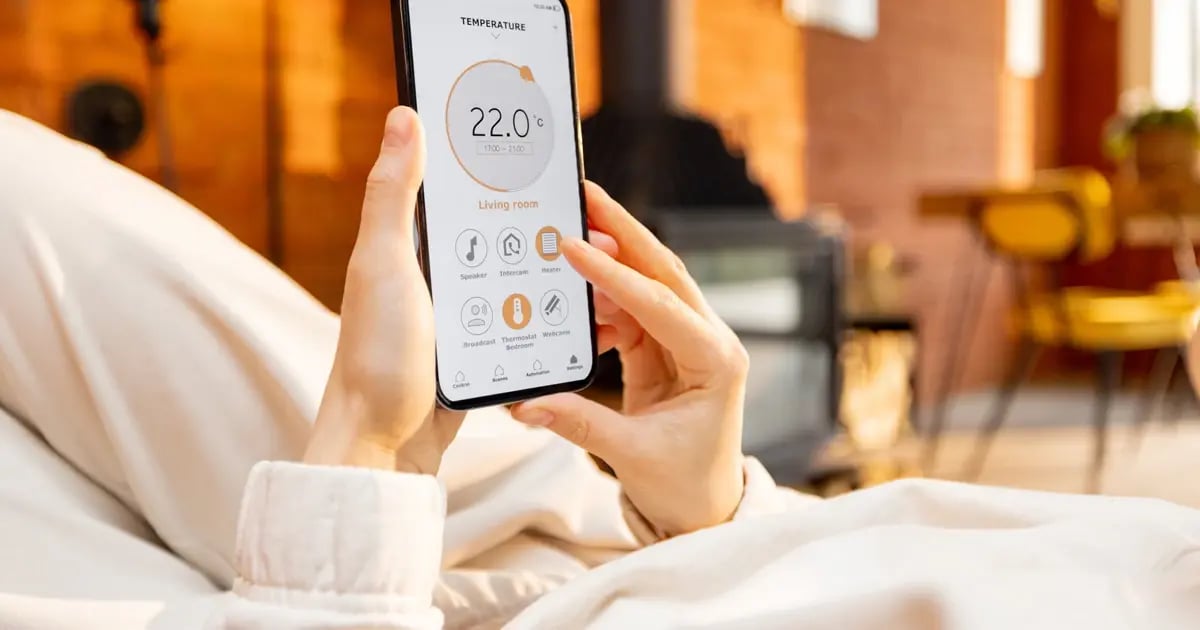
- Smart thermostats and energy management systems that automatically adjust heating and cooling based on occupancy—improving comfort while reducing energy waste
- Occupancy and motion sensors that optimize lighting to enhance guest comfort and safety in rooms, hallways and shared spaces
- High-performance connectivity (such as Wi-Fi 6) to support seamless streaming, mobile access and reliable connectivity throughout the property
- Connected maintenance and equipment monitoring systems that detect issues early, schedule preventative repairs and reduce costly downtime
Some hotels—particularly upper-midscale and luxury properties—are also experimenting with experience-led technologies such as voice-enabled room controls or smart mirrors that display useful information and support hands-free room adjustments. These tools can enhance guest experience but are typically layered on top of core operational systems rather than driving efficiency on their own.
Sustainability as a technology strategy
Sustainability has become a core component of hospitality modernization. Rather than standalone initiatives, sustainability is increasingly supported through integrated technology strategies.
Energy management platforms, efficient lighting, occupancy sensors, water-saving systems and renewable energy sources help hotels reduce long-term operating costs while improving environmental performance. When paired with data and reporting tools, these technologies also support Environmental Social Governance (ESG) reporting, regulatory compliance, and long-term resilience.
5. Big data, analytics, and cybersecurity: smarter decisions, safer systems
With digital transformation comes massive growth in guest and operational data. Hotels using business intelligence tools gain real-time insights that support:
- Dynamic pricing strategies
- Segmentation and targeted marketing
- Behavior-based personalization
- Demand forecasting
- Revenue optimization
- Real-time performance dashboards
Data-driven insights help operators react quickly to market trends and guest preferences.
Cybersecurity as a non-negotiable
As reliance on technology grows, cybersecurity becomes critical. Hotels face risks such as phishing, distributed denial of service (DDoS) attacks, ransomware, and malware targeting guest information.
Modern cybersecurity includes:
- Multilayer security systems
- VPNs
- Secure transactions
- Segmented guest networks
- Continuous threat assessment
- Compliance with GDPR and data privacy standards
- Payment Card Industry Data Security Standard (PCI DSS) protection for payment transactions
- Routine security software updates
A secure foundation ensures that innovation never compromises guest trust.

Your roadmap to adopting new hotel technology trends
Most hotels benefit from a phased approach:
1. Begin with a cloud-based PMS to unify data.
2. Digitize the entire guest journey with mobile-first workflows.
3. Strengthen analytics and cybersecurity to ensure long-term resilience.
4. Add IoT and smart building solutions to optimize energy and maintenance.
5. Introduce AI-driven automation to reduce labor pressure and refine forecasting.
Together, these hotel technology trends for the hospitality industry help hotels run leaner, adapt faster, and deliver consistently excellent guest experiences.
Ready to see how these technologies work across real hotel operations?
Book a demo to explore how RMS helps modern properties automate workflows, personalize the guest journey, reduce operational costs, and deliver exceptional service through a unified cloud platform.
FAQs: practical considerations when adopting new hotel technology
Common questions and answers for operators evaluating technology upgrades, prioritization and decision-making.
Where should hotels start when modernizing their technology stack?
Begin with systems that centralize data—such as a cloud PMS—before adopting add-ons like AI or IoT tools. Consolidation prevents duplication and avoids costly rework.
How can hotels evaluate whether a new technology is worth the investment?
Look for outcomes tied to cost savings or measurable service improvements—reduced check-in time, fewer manual tasks, or energy efficiency—not just novelty or trend appeal.
Do smaller or independent properties benefit from the same technologies as large hotels?
Yes, but scale and scope matter. Smaller operators often see the fastest return on investment (ROI) from cloud PMS, mobile check-in and energy-management tools, rather than robotics or fully immersive guest tech.
What are the biggest implementation challenges hotels should anticipate?
Integration with legacy systems, staff adoption and training, and initial setup costs. Choosing open-API platforms and phased rollouts reduces disruption.
How can hotels introduce automation without reducing the human element?
Use automation to remove friction—like form-filling and manual entry—so staff can focus on personalized service rather than replacing it. Technology should augment, not replace, hospitality.
What ongoing resources do hotels need to maintain modern systems?
Reliable connectivity, cybersecurity protocols and periodic staff training. Many cloud platforms reduce IT overhead by handling updates and support centrally.
How can sustainability be factored into technology decisions?
Prioritize tools that improve energy efficiency, water use or predictive maintenance. These often deliver long-term savings while supporting ESG goals and guest expectations.
When should hotels avoid new technology?
When it adds complexity without solving a clear problem. If a system increases workload, duplicates functionality, or lacks integration, it may hinder rather than help.