



Fresh ways to increase hotel ancillary revenue: Creative tips for your property
Room revenue keeps your hotel beating. But in a hospitality market shaped by rising commissions, compressed margins, and guests who expect more than a bed, it rarely builds the business.
The properties pulling ahead aren’t just filling rooms at better rates. Rather, they’re generating hotel ancillary income from every touchpoint in the guest journey—before arrival, during the stay, and long after checkout. And they’re doing it across every property type: full-service hotels, resorts, serviced apartments, campgrounds, and holiday parks.
What follows are 20 ideas designed for the full range of accommodation operators, including properties without restaurants, spas, or large teams. They’re organized into three groups, with a short advisory section between each.
Part 1: Quick wins that work for any property type
None of these ideas require a restaurant, spa, or dedicated revenue manager. They work at limited-service hotels, budget properties, campgrounds, serviced apartments, and boutique properties with small teams alike.
1. Early check-in and late checkout fees
This is one of the highest-margin opportunities available to any accommodation provider, because the cost to deliver it is close to nothing. The room is already cleaned, the guest is already booked; the only variable is access timing.
Price it dynamically: charge more during peak periods and weekends when demand for flexibility is highest. Even a modest flat fee, converted on a fraction of bookings, adds up quickly across a full year.
 Early property access is one of the easiest ways to drive ancillary revenue.
2. Pre-arrival upsell emails
Automated emails sent two to five days before arrival have open rates well above standard marketing benchmarks. That attention is valuable, and most operators leave it untapped.
Use the pre-arrival window to offer room upgrades, breakfast packages, early check-in, local tours, and relevant add-ons based on what the guest booked. Framing matters here: a personalized recommendation feels like hospitality, while a last-minute prompt feels like pressure. RMS supports pre-arrival automation tied directly to the booking record, so the right offer reaches the right guest without any manual effort once it’s set up.
3. Local experience and activity partnerships
Partner with local operators (tour companies, bike hire, kayak rental, surf schools, cooking class providers) and offer experience as part of the reservation or pre-arrival journey. Because the model is commission-based, there’s no upfront investment and no operational overhead.
This works particularly well for coastal resorts, regional campgrounds, and holiday parks near natural attractions, where soft adventure packages (guided hikes, bike trails, wildlife tours) tend to convert well. For city hotels, food tours, gallery visits, and cultural experiences resonate with the growing experience-first traveler segment.
4. Pet-friendly add-on packages
Pet travel has grown across all accommodation categories, and most properties are not monetizing it. A simple welcome kit (branded bowl, treat, a comfortable mat), a designated pet-friendly room tier, and a late-checkout allowance for pet owners can create a genuine revenue stream without significant investment.
For campgrounds and holiday parks especially, pet-friendly sites with enclosed yards attract a loyal repeat segment willing to pay a premium.
 Pet-friendly sites and hotels command a premium price.
5. Branded merchandise and local retail
A curated retail selection generates margins and extends the brand well beyond checkout. For campgrounds, this means stocking the essentials guests reliably forget: sunscreen, insect repellent, charging cables. For boutique and design-led properties, collaborating with local makers to display and sell their work creates an authentic experience that guests genuinely respond to.
6. Flexible workspace packages
A quiet lounge or a small meeting room can be sold on a day-rate basis to remote workers, freelancers, and local business users. Post-pandemic work habits have created real demand for well-equipped workspaces outside the home, and hotels and serviced apartments are well placed to meet it.
Even without a co-working platform partnership, a simple “workspace day pass” promoted on the property website can generate consistent non-room revenue from non-staying visitors.
7. Laundry and dry-cleaning services
Often overlooked, but consistently useful. For extended-stay properties and serviced apartments, laundry access is close to essential; guests in these segments will pay for dry-cleaning collection, express turnaround, or a wash-and-fold service. For smaller properties, self-service laundry with dynamic peak-period pricing keeps overhead low.
POV: Measure what you earn
Before adding more ancillary streams, it’s worth establishing how you’ll measure the ones you already have. Standard room metrics like average daily rate (ADR) and occupancy rate don’t capture non-room performance. The ones that do:
- Total Revenue per Available Room (TRevPAR) captures all revenue across the property, making it the most useful top-line measure of how well the whole operation is monetizing.
- Revenue per Occupied Room (RevPOR) measures average spend per staying guest. A rising RevPOR means guests are spending more per visit, which is the whole point.
- Gross Operating Profit per Available Room (GOPPAR) tests whether ancillary activity is profitable after costs are factored in, because a revenue stream that also consumes staff time and consumables may not be worth the effort.
For a full breakdown of hotel revenue key performance indicators (KPIs) and how to set benchmarks, see What is RevPAR.
Part 2: High-impact ideas for properties with facilities
These ideas suit properties with existing physical infrastructure: full-service hotels, resorts, holiday parks with activity facilities, and glamping operations. Where relevant, there’s a note on how limited-service properties can access a version of the same idea.
8. Spa and wellness: Beyond the resort model
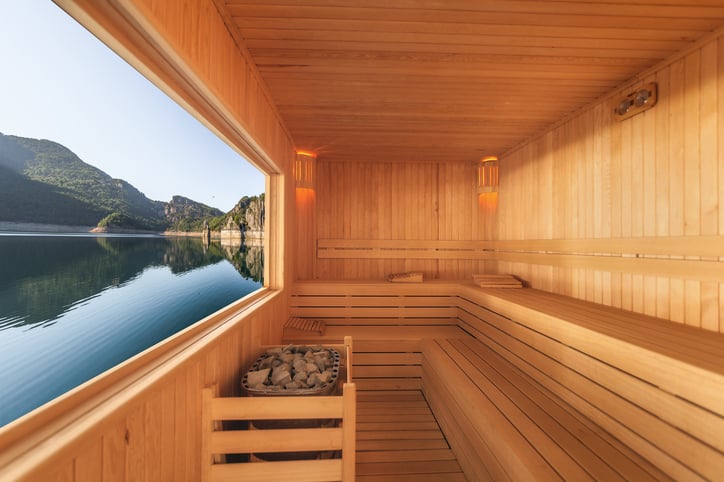
A dedicated spa is a significant investment most properties can’t justify. But wellness revenue doesn’t require one. Partnering with mobile massage therapists, yoga instructors, or wellness brands for on-demand, in-room or poolside services delivers the same guest benefit on a commission basis, with a fraction of the overhead.
Demand in this category is broadening, too. Sound healing, breath work, cold-water therapy, and forest bathing are all seeing strong interest at regional and nature-based properties. A campground offering a guided sunrise meditation followed by a cold-water experience is selling a wellness product, and should price it as such.
9. Food and beverage touchpoints
Food and beverage (F&B) can contribute significant ancillary income at full-service properties. For limited-service operators, the opportunity isn’t a full restaurant; it’s incremental spend at existing touchpoints. A minibar stocked with local products, a breakfast box that guests pre-order the night before, or a food truck partnership on weekends. None of these require a commercial kitchen or a dedicated food service team.
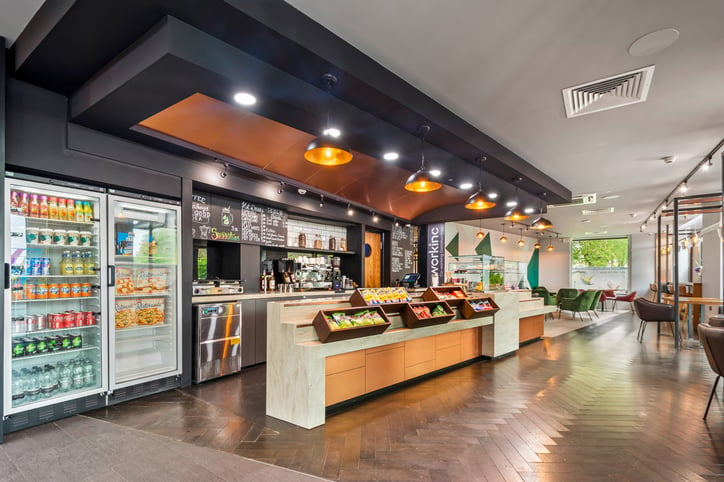 RMS customer Roomzzz doesn't offer an on-site restaurant and still has an F&B outlet.
10. Event space and venue hire
Meeting rooms, outdoor terraces, rooftop spaces, and pool decks sit idle at most properties outside peak guest periods. Hiring them independently of room bookings creates an extra hotel revenue stream that runs regardless of occupancy.
Urban hotels can target corporate clients for day meetings and product launches. Coastal resorts are well suited to weddings and private events. Holiday parks are a natural fit for school groups, corporate team-building days, and community events, markets that most traditional venues don’t serve particularly well. The RMS event module can support most of these requests out of the box.
11. Day-use room packages
A room sold from 8:00 AM to 4:00 PM to a remote worker or layover traveler is income that would otherwise sit at zero. Day-use pricing (typically 40–60% of the overnight rate) converts idle inventory into a steady ancillary income stream.
Third-party platforms like HotelsByDay can facilitate distribution, but integrating day-use inventory directly into your property’s own booking engine keeps the booking fee and the guest relationship in-house. The RMS booking engine supports this kind of flexible inventory configuration.
12. Parking monetization
Beyond standard guest rates, parking has real revenue management potential. Urban properties can open parking to commuters, eventgoers, and local residents during low-occupancy periods, effectively managing a second yield-driven inventory alongside rooms.
Performance is tracked via Revenue per Available Space (RevPAS). Electric vehicle (EV) charging is worth factoring in too; demand is rising across all traveler segments, per-session pricing is simple to implement, and ongoing overhead is low. Local regulations on EV infrastructure vary, so check with your municipality before committing to a rollout.
13. Children’s programs and family experience packages
Properties near natural attractions, beaches, or theme parks have a genuine opportunity for family travelers. Structured children’s activity programs, such as sports, games, or creative art and craft workshops, priced per child per day, can represent a solid revenue line at resort and holiday park properties.
For family adventure packs (activity guides, trail maps, scavenger hunt materials), the production cost is low; the perceived value is high.

14. In-room technology and premium connectivity
Tiered Wi-Fi pricing is already standard at many full-service hotels. The category extends further: in-room streaming access, smart-home amenity controls via a branded app, or rental of portable devices for guests on activity-focused trips. The logic is simple—identify the gap between what guests have at home and what the room offers, and price the upgrade to bridge it.
POV: Evaluating return on investment (ROI) before you commit
Not every ancillary idea will generate real profit at your property. Before investing in infrastructure, staff time, or third-party partnerships, it’s helpful to test three variables.
- Revenue potential: How many guests would realistically use this, and at what average spend? A $20 pet welcome kit sold to 15% of pet-owning guests is a very different calculation from a spa package at $180 sold to 5% of all guests.
- Cost to implement: Staff hours, setup cost, third-party commissions, consumables, and maintenance. Commission-based partnerships are a good starting point, because the cost structure is variable, and you only pay when revenue comes in.
- Time to break even: Low-investment streams like pre-arrival emails and late-checkout fees can turn positive within 30–90 days. Higher investment ideas need a longer payback analysis before you commit.
A useful rule of thumb: prove demand with zero-capital or commission-based ideas first, then build the infrastructure behind what’s already converting.
Part 3: Tech-enabled and emerging revenue ideas
These are the ideas that don’t show up in most ancillary revenue guides—approaches that forward-thinking operators are already running and that others are starting to take seriously.
15. AI-powered upselling via the guest portal
The difference between an upsell that converts and one that gets ignored comes down to timing and relevance. A returning guest who previously booked the spa gets a targeted pre-arrival offer—that converts. The same offer sent as a blanket message to every booking in the same email batch, not so much.
Modern property management platforms can trigger personalized offers based on booking data, guest history, and segment behavior, and once configured, the whole thing runs automatically. The RMS guest portal supports targeted pre-arrival and in-stay communication that adapts to the individual guest record.
16. Dynamic pricing on non-room inventory
The yield management logic behind room rate optimization can be applied to parking spaces, event rooms, spa appointments, and dining reservations. Cloud-native property management platforms are increasingly extending dynamic pricing beyond rooms, and properties with unified data platforms are better positioned to act on it than those managing hotel additional revenue streams across disconnected systems.
17. Subscription and membership models
Monthly or annual memberships (offering discounted rates, guaranteed availability, F&B credits, or pool and gym access) are gaining traction at urban properties that see the same guests frequently.
For campgrounds and holiday parks, annual passes with priority site booking can lock in revenue well before the season opens. Members tend to book more often, spend more per visit, and stay loyal—and broad consumer comfort with subscription billing has made this a more viable model for hospitality than it was just a few years ago.
18. Space hire for content creation and photography
Properties with a strong visual identity (boutique hotels, design resorts, glamping operations with distinctive natural settings) can open their spaces for photography sessions, brand shoots, and social media content creation. Half-day or full-day hire rates, with optional styling assistance, create a non-room revenue stream with minimal staff involvement.
19. Community-facing events and programming
Opening the property’s restaurant, bar, outdoor space, or function room to local residents generates direct revenue from non-overnight visitors and builds genuine presence in the community. Wine dinners, chef pop-ups, art exhibitions, fitness classes, and farmers markets can all be ticketed or sold on a per-activity basis. Holiday parks can run seasonal markets; resorts can open their beach club on a day-pass model during shoulder periods.
Licensing requirements for alcohol service and event capacity vary by jurisdiction. Check with your local authority before promoting public events.
20. Upselling through the booking confirmation journey
The booking confirmation and pre-arrival sequence are the highest-engagement touchpoints in the guest journey, and among the most underused for non-room revenue. Most operators use these communications to confirm details and share directions. The ones seeing the strongest results embed direct-purchase add-ons at the same stage: breakfast bundles, room upgrades, early check-in, experience packages.
The timing makes sense. The guest has just committed to staying; their intent is high, and their attention is on the property. That’s a better moment to offer an upgrade than check-in, when they’re tired, managing luggage, and ready to get to their room. RMS supports this journey end-to-end, from the confirmation email through pre-arrival offers and in-stay communication.
POV: The tech stack that makes ancillary revenue scalable
Managing ancillary revenue manually, through phone calls, front-desk conversations, and ad hoc charge posting creates a ceiling on what’s achievable. Properties seeing the strongest growth are using connected systems to automate offer delivery, purchase capture, and revenue reporting.
- Booking engine allows guests to purchase extras at the reservation stage, the point of highest intent in the journey.
- Automated pre-arrival communication sends targeted upsell offers at the right timing window without any staff involvement.
- The guest portal gives in-house guests a self-service channel to purchase upgrades and book services, taking load off the front desk.
- RMS Pay captures ancillary revenue at the point of service with no friction, and every transaction flows into the same reporting view as room revenue.
RMS connects all of these in a single cloud-based platform, giving operators the infrastructure to run a scaled ancillary strategy without adding headcount.
The guest experience tension
There’s a fine line between a well-timed add-on and a fee that feels like extraction. Crossing this line consistently costs more in negative reviews and lost repeat business than any ancillary program can make back.
The most effective approaches to ancillary income in hospitality are built around genuine guest value. Guests buy extras when an offer feels like a thoughtful recommendation matched to their trip. They resent them when the offer feels like a property working every available revenue angle.
Timing is the biggest factor. An upgrade pushed at check-in, when a guest is managing luggage and just wants to get to their room, creates friction. The same offer sent three days before arrival, framed as a personalized recommendation, feels like good service.
Personalization matters just as much. Properties using guest data to match the right offer to the right person see higher conversion and stronger satisfaction scores; the offer feels considered rather than automated.
Volume rounds it out. A curated selection of three or four relevant extras signals a property that knows its guests. A screen listing twenty options signals something closer to an airline checkout page. Editing the offer down is usually the right call.
Approached well, hotel ancillary revenue doesn’t trade off against guest experience; it genuinely enhances it. Guests leave having had a richer stay; the property earns more per visit, and the reviews tend to reflect both.
Request a demo to explore how RMS can help you build a smarter ancillary revenue strategy.
Frequently asked questions
What is hotel ancillary revenue?
Ancillary revenue is any income a property earns from products, services, or experiences beyond the base room rate. Common examples include F&B, spa services, parking, early check-in fees, room upgrades, and experience packages. For campgrounds, holiday parks, and serviced apartments, the principle is the same: any revenue outside the site or unit booking fee counts.
How much hotel revenue typically comes from ancillary sources?
It depends on the type of property, but Industry benchmarks across the U.S. lodging sector suggest ancillary revenue typically accounts for 30–40% of total revenue in full-service hotels.
In these properties, room revenue generally represents around 60–70%, with the remaining income coming from food and beverage, meetings and events, spa services, parking, resort fees, and other guest add-ons.
Limited-service hotels often generate 85–95% of revenue from rooms, with minimal ancillary income.
Resorts and destination properties can derive 35–45% of total revenue from non-room sources, particularly where on-site dining, recreation, and events are strong.
That’s why many operators now focus on Total Revenue per Available Room (TRevPAR) rather than RevPAR alone—because the real revenue opportunity increasingly lies beyond the room.
What are the most profitable ancillary revenue streams?
F&B consistently ranks as an ancillary stream, though margins can be lower than accommodation revenue. For limited-service properties, pre-arrival upsells, early arrival or late checkout fees, and local activity partnerships tend to deliver the strongest ROI relative to what they cost to set up. The most profitable stream for any property comes down to guest mix, available facilities, and operational capacity.
How can limited-service properties generate ancillary revenue?
The highest-return options require little to no capital: early/late checkout fees, automated pre-arrival upsell emails, commission-based local experience partnerships, pet-friendly packages, and curated retail. None require on-site dining, a spa, or additional staff.
What technology helps automate ancillary revenue?
The core stack includes a booking engine with integrated add-ons, automated pre-arrival emails linked to guest data, a self-service guest portal, and integrated payments. Cloud-based property management systems like RMS connect all of these and give operators full visibility into ancillary performance across every revenue channel.
Is ancillary revenue strategy different for campgrounds and holiday parks?
The principles are the same, but the viable streams differ. Strong options for outdoor properties include equipment rental, premium site upgrades (powered sites, glamping tiers, waterfront positioning), seasonal food and beverage partnerships, family programming, and annual membership passes that generate revenue before the season even starts