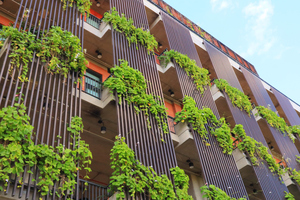



The glamping industry has grown up.
What began as a boutique niche is now a serious part of the outdoor hospitality market. The UK and Europe have led the way for years; the United States is now expanding quickly as more guests look for nature with comfort built in.
From nature getaways and wellness retreats to organic farming experiences, the key benefits of running a glamping business are lower investment, eco-friendliness, unique experiences, and appeal to diverse traveler segments.
But social media aesthetics, good views, and beautiful tents are not enough.
Running or starting a successful glamping business takes structure, clear systems, and smart financial decisions. The operators who thrive are not just creative; they are disciplined. They protect margins, manage complexity, and deliver consistent guest experiences.
Whether you are launching your first campground site or managing multiple properties, the goal is the same: memorable stays and healthy profits. Everything else supports that.
The glamping business model
Glamping sits between traditional hotels and outdoor recreation. That makes it exciting—and operationally complex.
Unlike hotels with uniform rooms, glamping properties often include:
- Safari tents
- Tree houses
- Geodesic domes
- Cabins or tiny homes
- Yurts or bell tents
Each unit type has different revenue potential, maintenance needs, utility requirements, and guest expectations
A single property may serve families in entry-level tents and couples celebrating anniversaries in premium tree houses. That diversity increases revenue opportunities; it also increases operational demands.
You are not running one accommodation type. You are running multiple micro-businesses under one brand. Successful operators recognize this early and build systems and procedures that standardize booking processes, guest communication, cleaning checklists, and maintenance schedules.
Consistency behind the scenes allows flexibility in the guest experience.
Regulations and compliance
Glamping sits between campground and hotel regulations in many jurisdictions. Requirements vary.
Beyond choosing a suitable location for a glamping site, the significance of zoning and planning permissions, the importance of mandatory permits, and the obligation to meet legal requirements cannot be understated.
Before investing heavily, review zoning rules, building code classifications, health and safety standards, campground insurance coverage, local charges, and tax obligations.
Accommodation types may be classified differently under building codes. Temporary structures and permanent cabins do not face identical requirements.
Insurance policies should reflect outdoor hospitality risks, including on-site activities.
A property management system (PMS) can assist with tax collection and documentation. RMS automatically calculates relevant taxes based on accommodation type and location, reducing compliance risk.
Clarity early prevents disruption later.
Business planning and finance
Financial discipline is equally important. Ensure you understand startup costs, revenue expectations, and factors that influence financial outcomes.
Start with a solid glamping business plan template and revisit it regularly. Examine different options for securing financing, such as loans and investment sources, as requirements and offers will vary over time.
Understand occupancy rates and operating costs. A misjudged occupancy target impacts your revenue potential, and operating costs can quickly erode profit margins.
Maintain detailed cost visibility and build reserves covering at least 3 to 6 months of operating expenses. That buffer supports property upgrades, repairs, or market slowdowns without reactive decisions.
Growth should feel planned, not reactive.
Market research and marketing strategies
Glamping businesses evolve. Guest expectations shift. New competitors enter the market.
While there's a lot of emphasis on conducting thorough market research before starting, ongoing market research is just as critical.
Make sure you identify the ideal customer base for a glamping business. Be clear about your target market—a niche business is never going to appeal to everyone, be they couples on romantic getaways, families, digital nomads, retreat groups, or adventure seekers. Understand the age groups that favor your niche and boost occupancy by highlighting your amenities. Where your property’s proximity to nature is a drawcard, find ways to reach outdoor lovers.
Track competitor pricing. Watch accommodation trends. Pay attention to growing segments such as wellness travel or pet-friendly stays. Subscribing to industry publications and connecting with other operators keeps you grounded in reality rather than assumptions.
Your annual online marketing plan should be informed by the local market and strategic reviews of:
- Performance by unit type
- Revenue by channel
- Profit margins across add-ons
- Operational bottlenecks
Know which accommodations truly drive profit. Some look impressive but quietly erode margin; others deliver steady returns with minimal complexity.
Effective methods for promoting a glamping business include building an online presence, listing on booking platforms, and using seasonal offers to attract guests.
Seasonal demand and cash flow
Seasonality is part of outdoor hospitality. Summer occupancy may exceed 90 percent; winter may fall sharply. The difference affects staffing, pricing, and cash flow.
Strong operators plan for this.
Revenue strategy
- Use dynamic pricing to reflect demand.
- Create packages that highlight seasonal strengths.
- Encourage advance bookings to improve cash visibility.
A fall retreat or winter astronomy weekend works better than across-the-board discounting. Lean into what makes each season distinctive.
Cost management
- Align staffing with occupancy.
- Maintain a small core team year-round.
- Use slower periods for maintenance and upgrades.
Some operators close during extreme weather months. If that suits your region, communicate reopening dates clearly and capture early bookings before competitors do.
Detailed reporting helps you identify patterns. You may find that certain unit types perform consistently in shoulder seasons, or that minimum-stay adjustments improve revenue without reducing occupancy.
Plan and staff around seasonality.
Design as a drawcard
Design is one of the strongest drawcards of a glamping business. Guests choose these properties for immersion in the landscape, not just shelter.
Design touches every aspect of a glamping site, including selecting structures, installing essential utilities, furnishing accommodations, landscaping, and providing amenities for guests.
When designing and equipping sites, performance comes first.
Core design principles
Design for climate first: Structures must perform in local conditions. Domes and glass lodges, for example, can withstand wind and cold while maximizing views.
Plan infrastructure early: Remote placement requires careful planning for temperature control, electricity, and water access.
Make the landscape part of the product: Clear sightlines to auroras, desert horizons, or forest canopies are not extras; they are value drivers. Outdoor seating and fire pits are opportunities to enhance the site layout.
Use layout to solve privacy: Spacing and orientation often reduce exposure without heavy infrastructure.
If you are looking for inspiration, these properties demonstrate what thoughtful design can achieve.
Glamping sites designed with the environment in mind |
|
|
Panorama Glass Lodge, Iceland Floor-to-ceiling glass walls allow guests to experience auroras in winter and midnight sun in summer. Private hot tubs and outdoor decks show how elevated amenities can integrate with remote settings where utilities require careful planning. |
Pench Treelodge, India Guests stay in elevated tree houses or forest cottages within a 40-acre jungle. A professionally designed underground wildlife photography hide allows close observation without disturbing animals—an example of experience-led design done thoughtfully. |
|
EcoCamp Patagonia, Chile Opened in 2001 as the world’s first geodesic hotel, EcoCamp sits below the Torres del Paine peaks. Its eco-friendly domes, elevated walkways, and locally crafted interiors protect the surrounding environment while offering comfort in a remote national park. |
Longitude 131°, Australia This iconic luxury glamping resort overlooks Uluru–Kata Tjuta National Park. Tensile-membrane tent pavilions include expansive views, private decks, eco-friendly fire pits, and stargazing beds. The central Dune House creates a shared social space with panoramic desert vistas. |
|
Wilderness Hoanib Skeleton Coast Camp, Namibia Built for a harsh desert climate, the tented suites are fully solar powered with shaded decks and open layouts that complement the landscape rather than compete with it. Award recognition confirms that remote, low-impact design can still deliver luxury.
|
White Desert, Antarctica Few environments test design like Antarctica. Heated, removable polar pods operate in severe conditions with minimal footprint. Industry recognition reflects the balance between extreme engineering and guest comfort. |


Exceptional guest experiences
Design attracts attention. Consistency builds reputation.
As properties grow, maintaining quality across units and staff becomes harder. Standardization helps without sacrificing character.
Develop clear procedures for:
- Accommodation preparation
- Guest check-in and checkout
- Cleanliness standards and cleaning schedules
- Ongoing maintenance
- Emergency procedures
Automated communication supports timing and personalization. Pre-arrival messages confirm logistics and set expectations, while contactless check-in offers convenience. Post-stay follow-ups encourage reviews and repeat visits. When systems personalize messages by unit type or occasion, the experience feels attentive rather than automated.
Maintenance deserves particular attention. Canvas tents, cabins, and domes age differently. Preventive schedules reduce emergency repairs and protect reviews.
Feedback loops matter. Track themes across reviews and act early. Small adjustments prevent recurring problems.
Revenue beyond nightly rates
Profitable glamping businesses expand revenue in ways that enhance the stay.
Nightly rates are the foundation. They should not be the ceiling.
Experiences: Guided hikes, cooking classes, spas, stargazing tours, yoga sessions, photography workshops. Experiences increase average guest spend and deepen the memory of the visit.
Food and beverage: From full dining concepts to curated provision baskets or partnerships with local vendors, food can meaningfully lift revenue. The key is to align the offer with staffing capacity and guest expectations.
Seasonal packages: Winter stargazing retreats. Fall foliage weekends. Wellness escapes. Packages give guests a reason to travel during slower months and support stronger pricing than simple discounts.
Equipment rentals: Bikes, outdoor gear, photography equipment. Labor cost is low once established; service provides steady incremental revenue.
More revenue streams create more moving parts—inventory, scheduling, payments, and communication. This is where a PMS becomes essential.
Platforms such as RMS allow operators to manage accommodations, add-ons, payments, and reporting in one system. That reduces friction as the business grows.
Operations and profitability
Profitability comes from balance: premium experiences paired with efficient operations.
Labor is typically the largest expense. Cross training staff creates flexibility and reduces bottlenecks. Online check-in and digital payments reduce front-desk pressure during peak arrivals.
Inventory management also impacts margins. Track linens, amenities, and consumables carefully. Surplus stock ties up capital; shortages create guest frustration.
Distribution strategy affects profit directly. Direct bookings through your website carry higher margins because you avoid commissions. Online travel agencies (OTAs) provide reach and incremental occupancy.
Many operators aim for roughly half of bookings direct, using OTAs strategically. Channel management maintains synchronized availability and pricing across platforms, reducing administrative time and preventing double bookings.
Efficiency should never feel harsh. It should feel smooth.
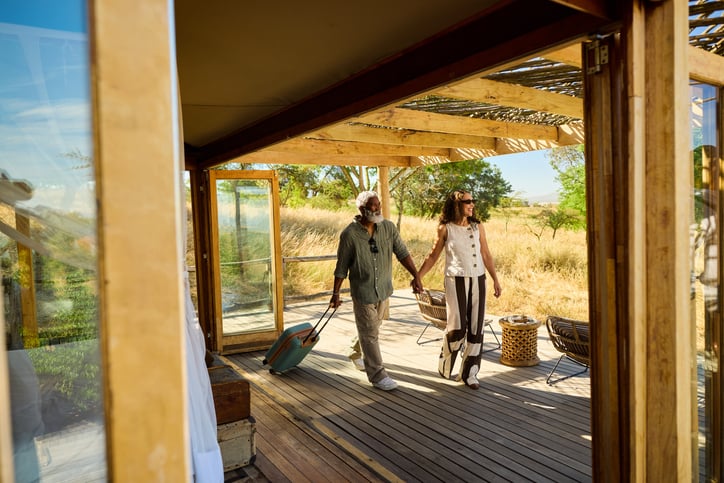
A technical foundation for growth
Many glamping businesses start simply with spreadsheets for bookings, manual payment processing, and email for guest communication
That works, until it doesn't.
As bookings increase, administration expands. Time shifts from guest experience to paperwork.
A modern PMS streamlines core tasks:
- Automated pre-arrival messaging
- Centralized calendars
- Integrated payment processing
- Demand-based pricing tools
For multi-property operators, integration matters even more. RMS hospitality management software supports online bookings, workflows, and multi-site management from a single platform. The result is clarity: one source of truth, less duplication, and more time spent on guests.
Technology does not replace hospitality. It protects it.
Structure for expansion
Early-stage glamping businesses often rely on energy and improvisation. Growth requires documentation and structure.
Standard operating procedures allow new team members to maintain quality without guesswork. Clear documentation also highlights inefficiencies that can be improved before expansion.
Data should guide development decisions. If premium tree houses consistently outperform tents in both rate and occupancy, expansion should reflect that insight.
Multi-property operators benefit from centralized systems, shared campground marketing, and consolidated reporting. RMS enables portfolio-wide visibility so performance can be compared and managed from a single platform.
Partnerships also support growth. Collaboration with local wineries, tour providers, or restaurants expands your reach and strengthens the overall guest experience.
Expansion should feel deliberate, supported by financial reserves and realistic projections.
The path to profitable operations
Running a glamping business means balancing creativity with discipline.
You are creating experiences in extraordinary settings. You are also managing pricing, staffing, utilities, maintenance, and cash flow.
The operators who succeed treat glamping as serious hospitality. They rely on data, invest in systems, and protect consistency.
Charisma helps. Systems last.
With the right foundations—clear financial visibility, structured operations, thoughtful design, and effective technology—your glamping business can move beyond viability and into long-term profitability.
Three tree houses or thirty sites, the principles remain the same:
- Understand your economics.
- Build scalable systems.
- Use technology wisely.
- Never compromise on guest experience.
Get those right, and growth becomes sustainable rather than stressful.
Request a demo of RMS campground management software to get started.
These images have been sourced from press kits or galleries on the company websites.